““…I was captivated and impressed by Thaïs… an experience for me that I will not soon forget …[Thais] offered times of both reflection and beauty...”
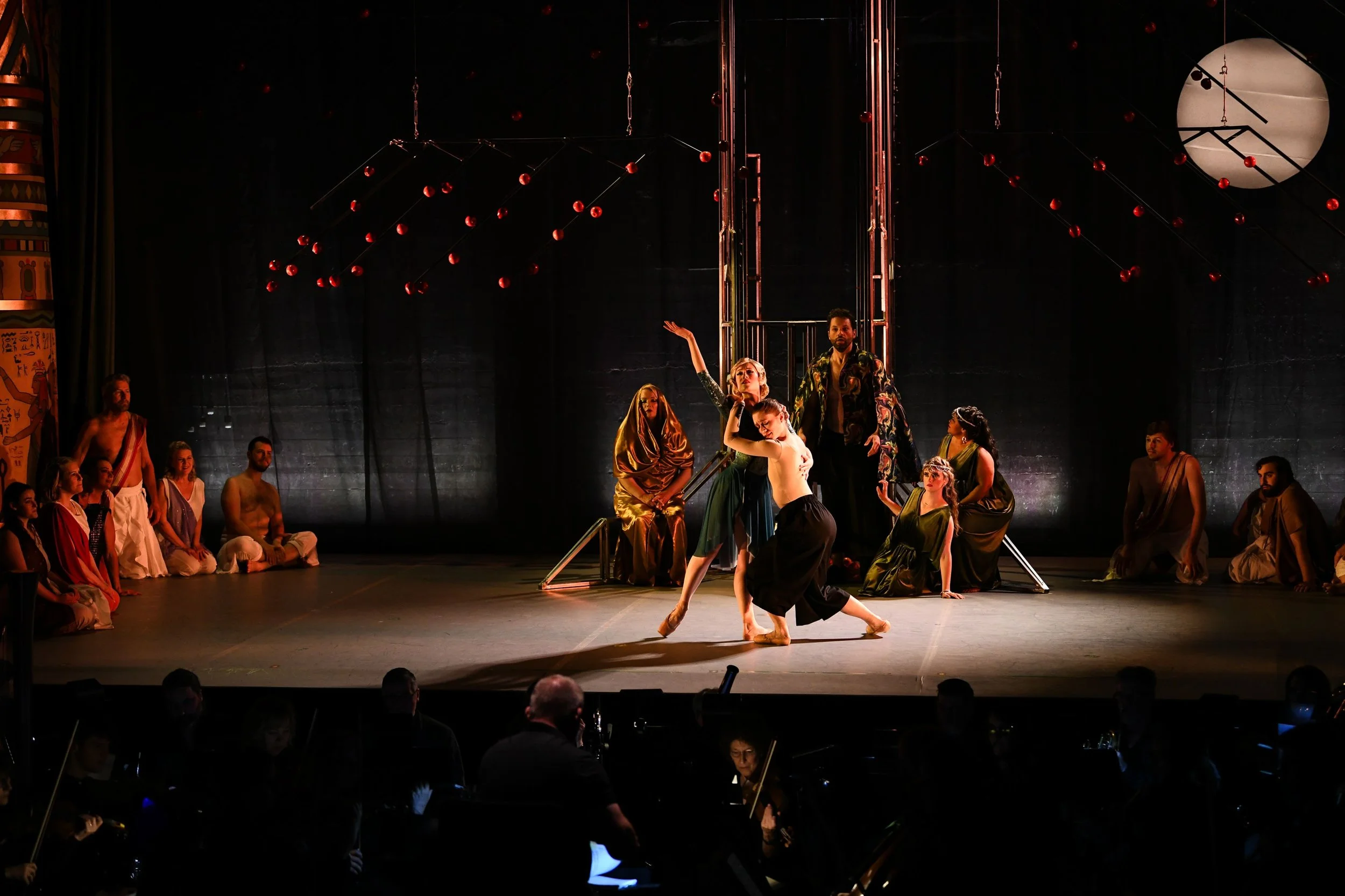
My favourite Tennessee Williams quote is when Vivien Leigh, in A Streetcar Named Desire, purrs in a southern accent, “Death is the opposite of desire.” Thais is a gorgeous exploration of this very idea: the juxtaposition of death and desire, the “Liebestod" or “love-death” that we just can’t escape in opera. Thais takes this most familiar of themes into the most exotic (to the nineteenth century French) of times and places, Hellenistic Egypt. Its psychologically sophisticated, shockingly modern libretto tells a story of complex, flawed, not always sympathetic people making choices that are inevitable in the framework they’ve been given.
This story follows our protagonists’ (antagonists’?) opposing ways of manifesting their sexuality in their struggle against death. Both Thais and Athanael are terrified both of literal death, and of losing control of their lives, which they view as a kind of death. Athanael has fixated on Thais since access to her body was denied him in his teens (something only briefly alluded to in the opera but talked about in more detail in the book on which the opera is based.) Thais’s only means of agency is through manipulation of others’ sexuality, while Athanael’s obsession with her is so diametrically opposed to his ideology that rather than acknowledge it, he must erase its cause (her.) His grip on his sexuality is so precarious that he must destroy both of their bodies to maintain it. (Like the mythic water nymph Daphne: unable to escape Apollo’s sexual pursuit of her, in desperation, she asks her father, the river god, to transform her body into a tree.)
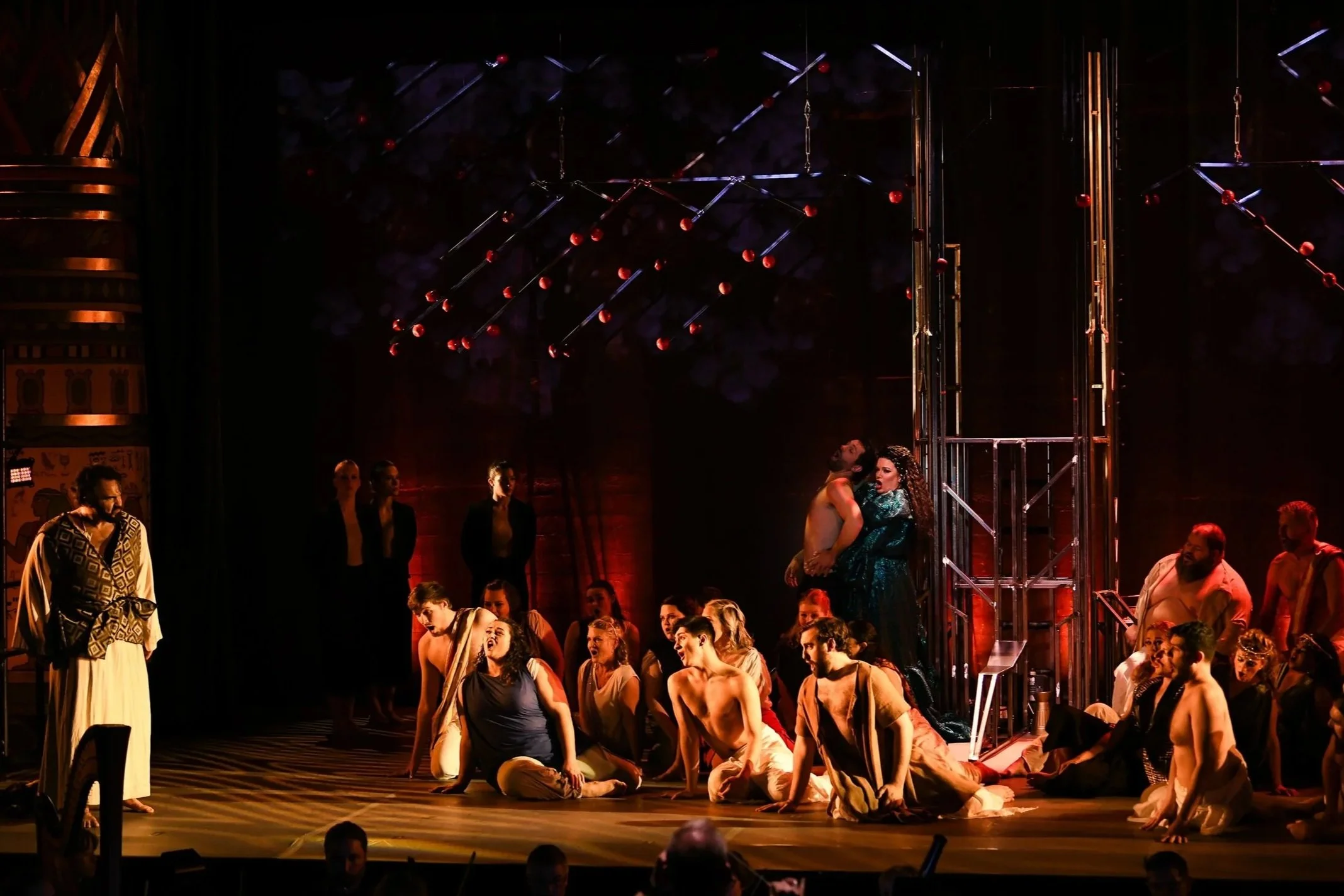
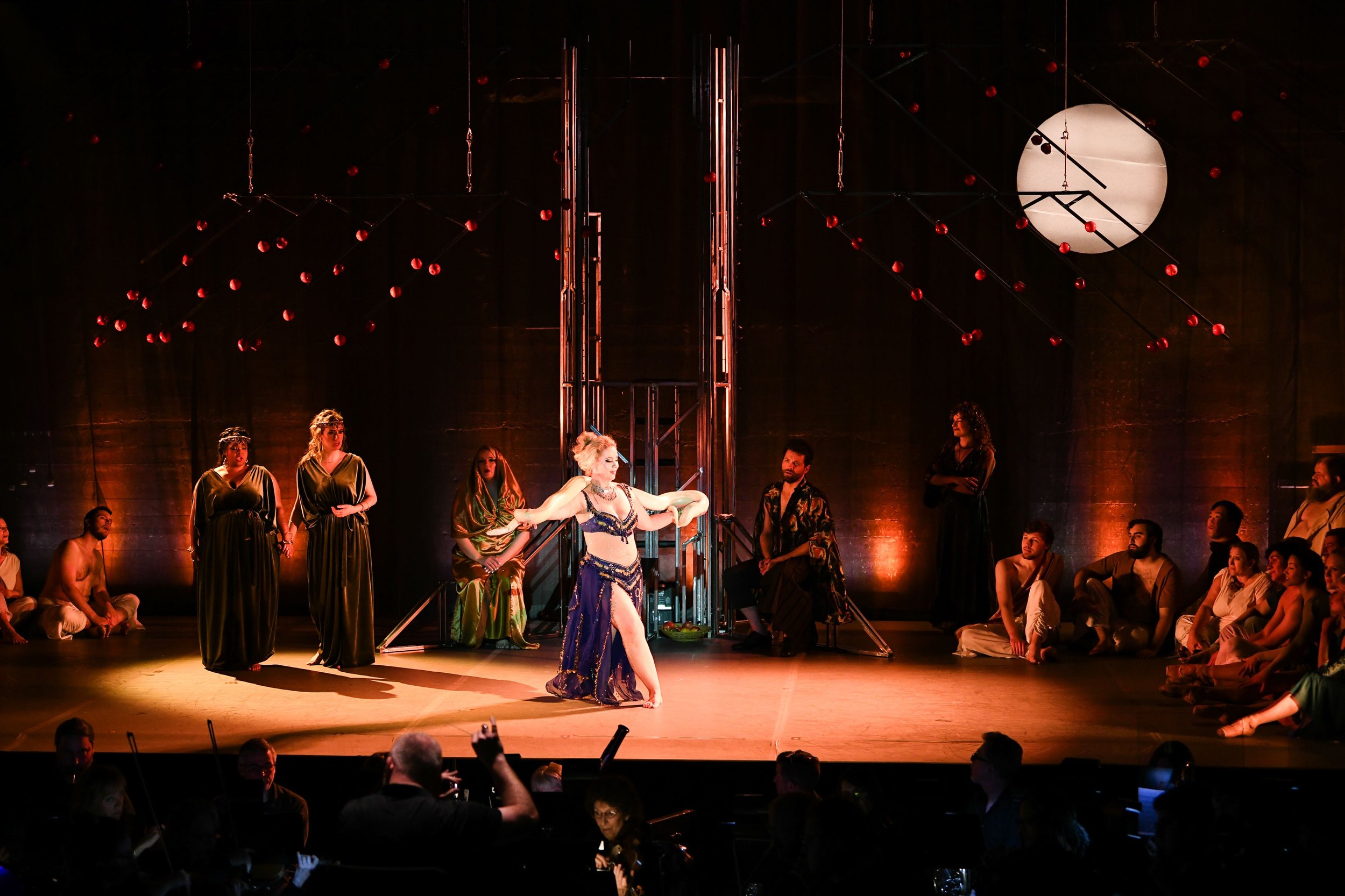
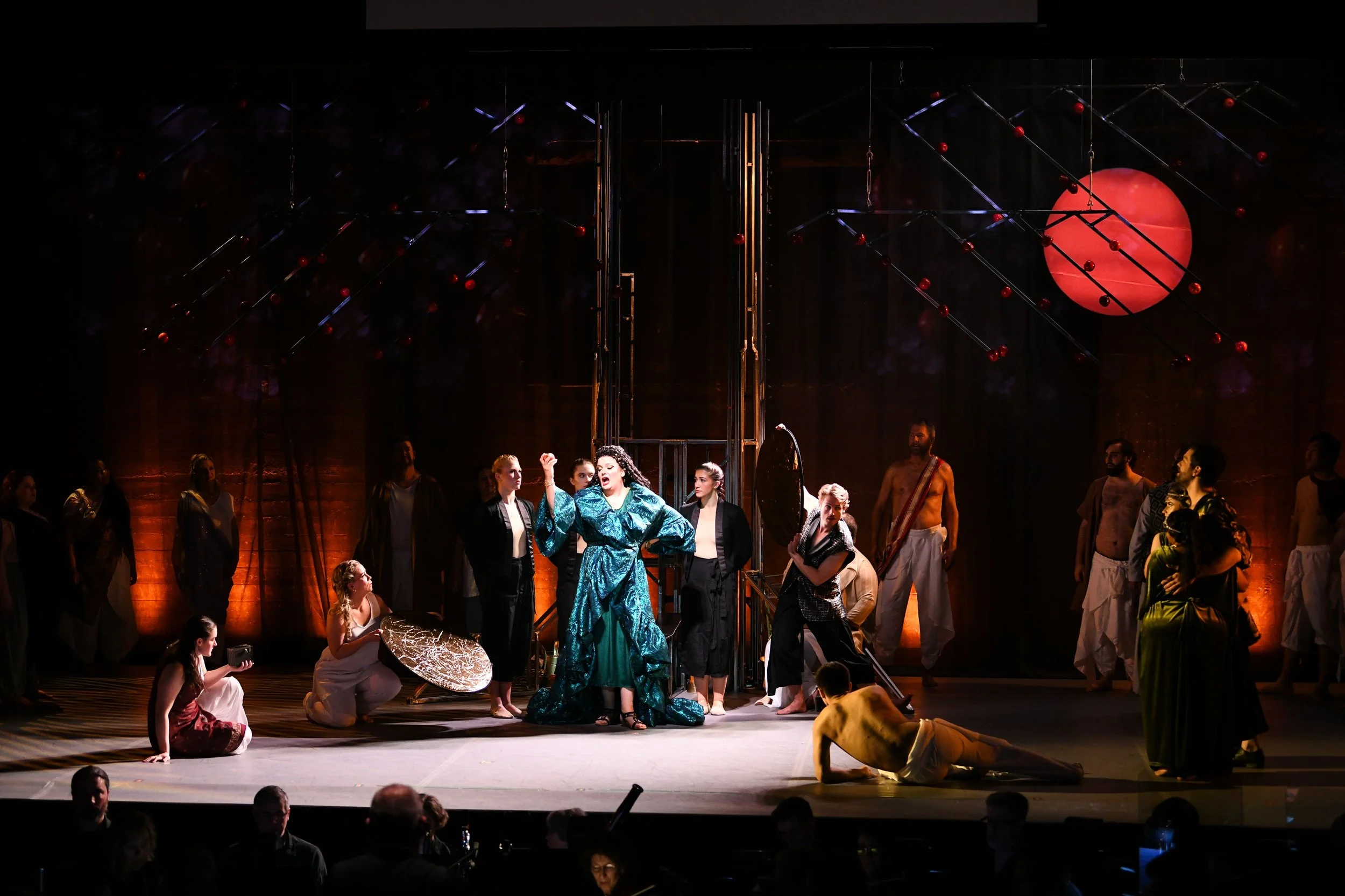
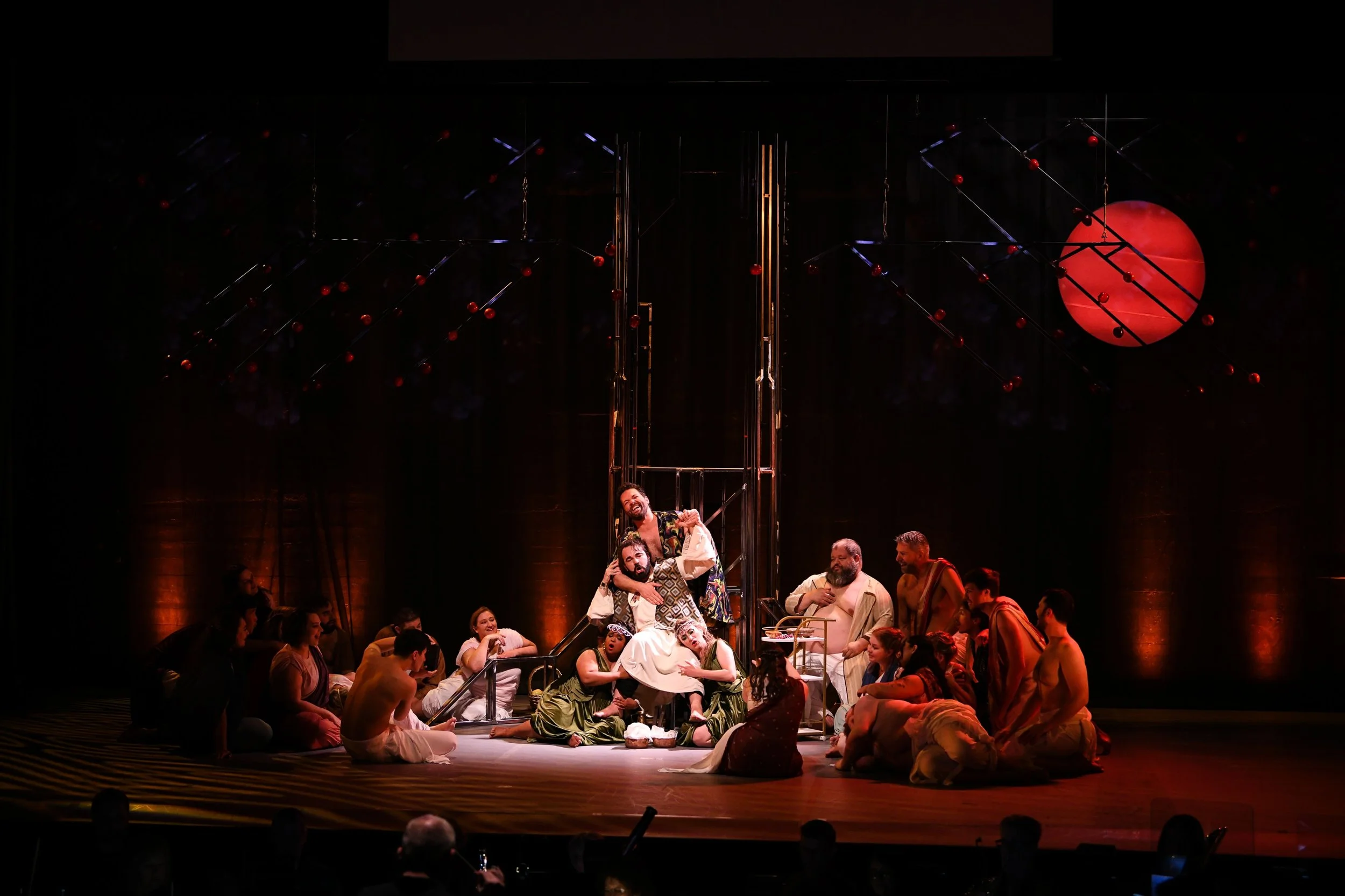
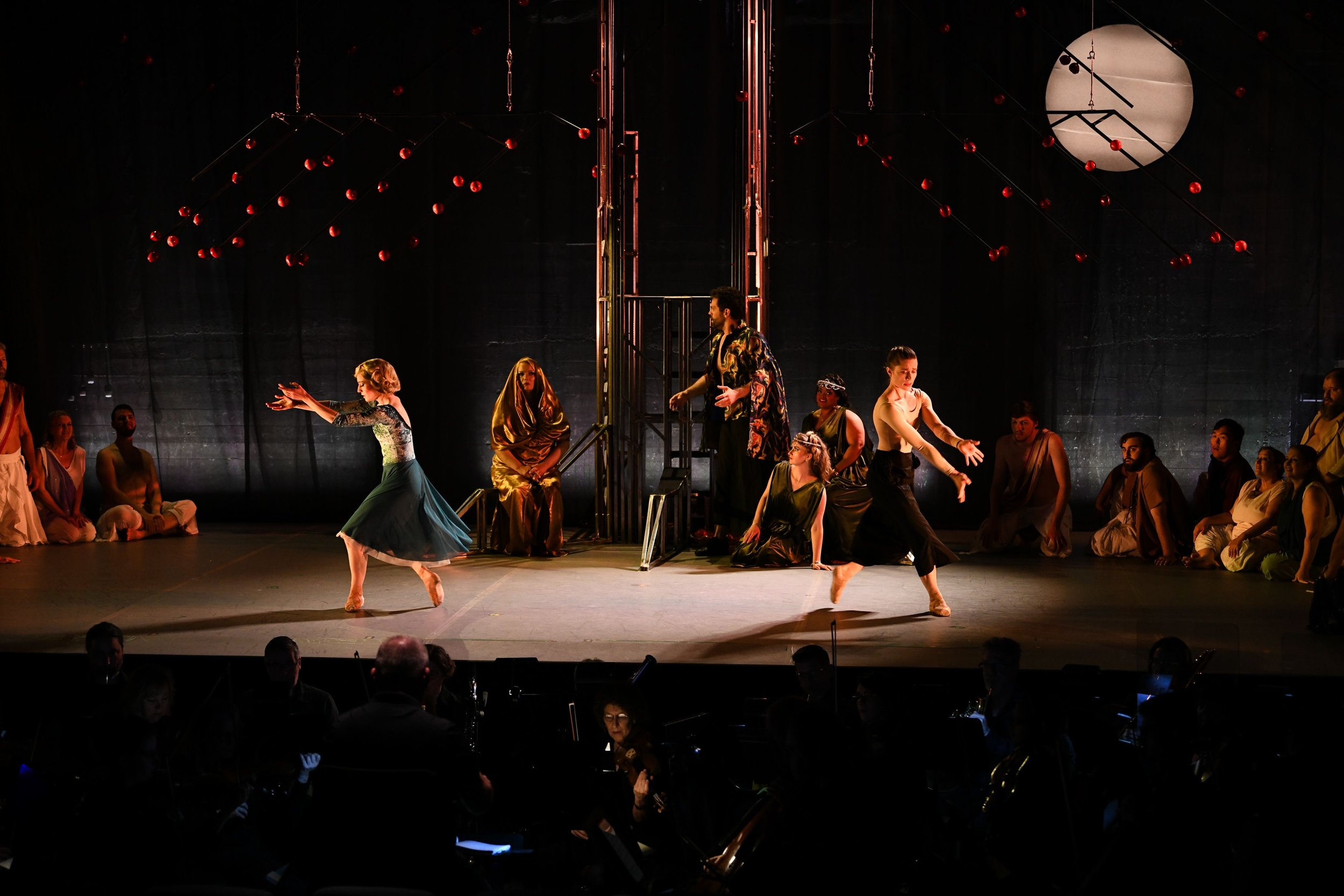
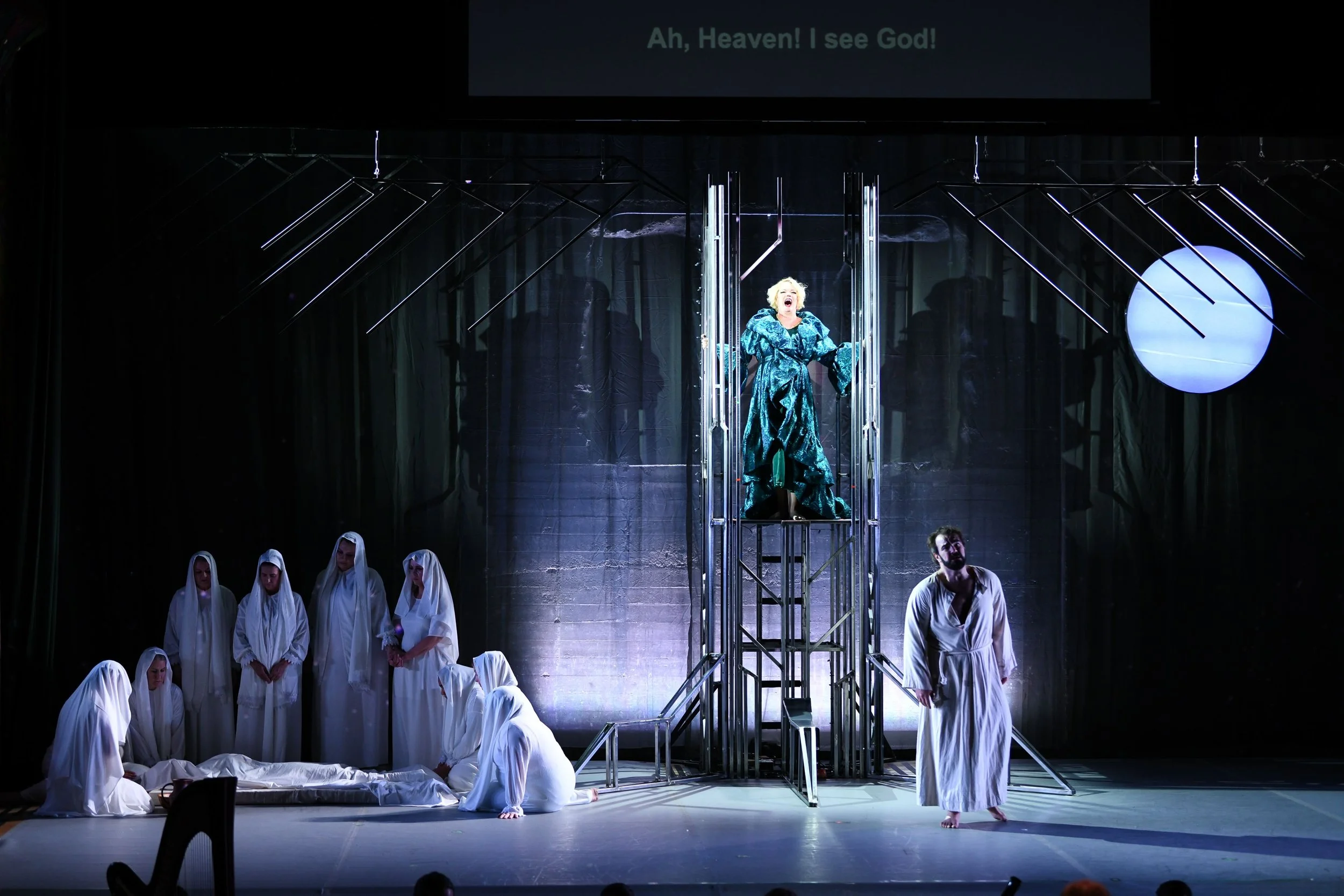
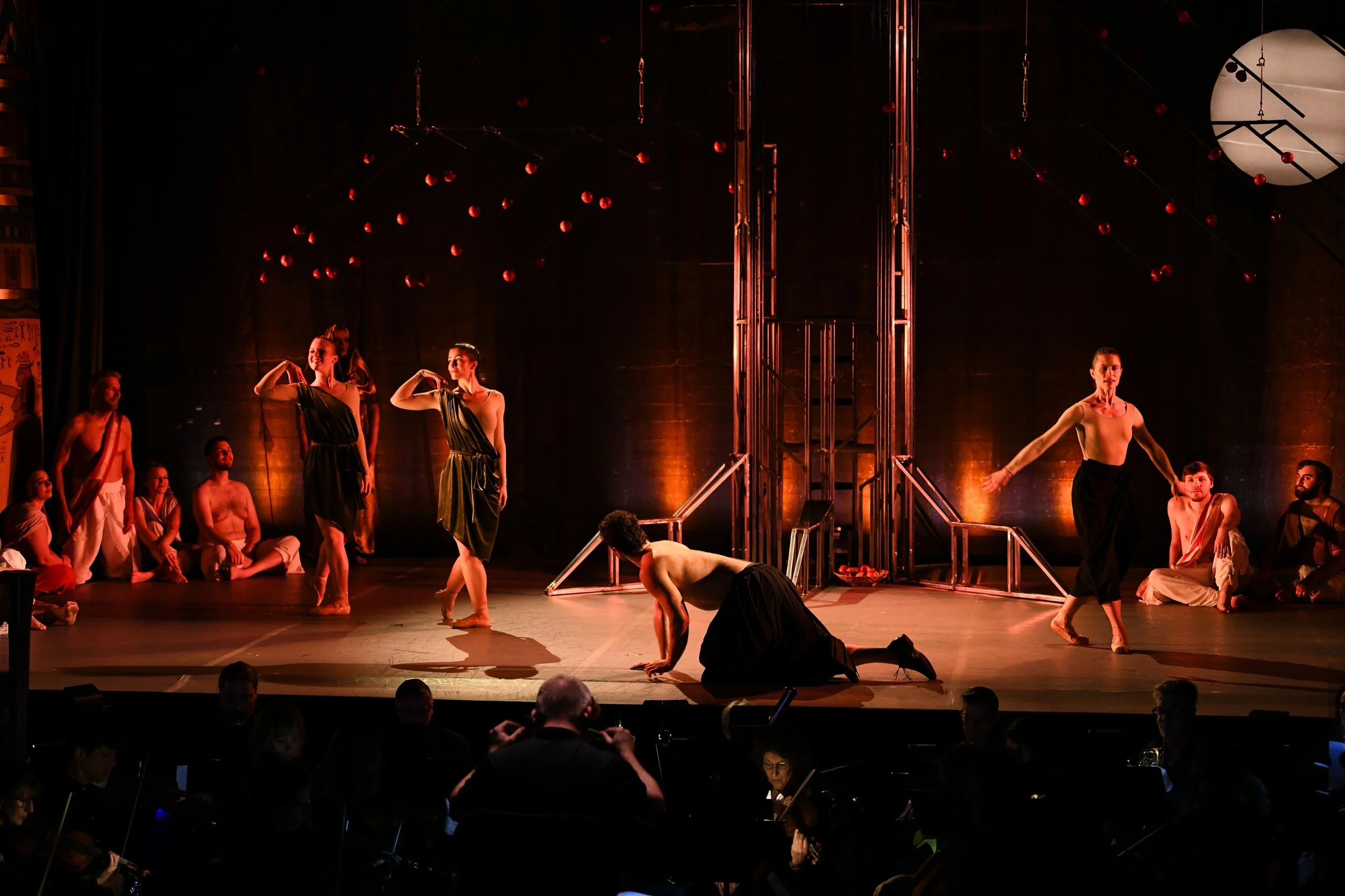
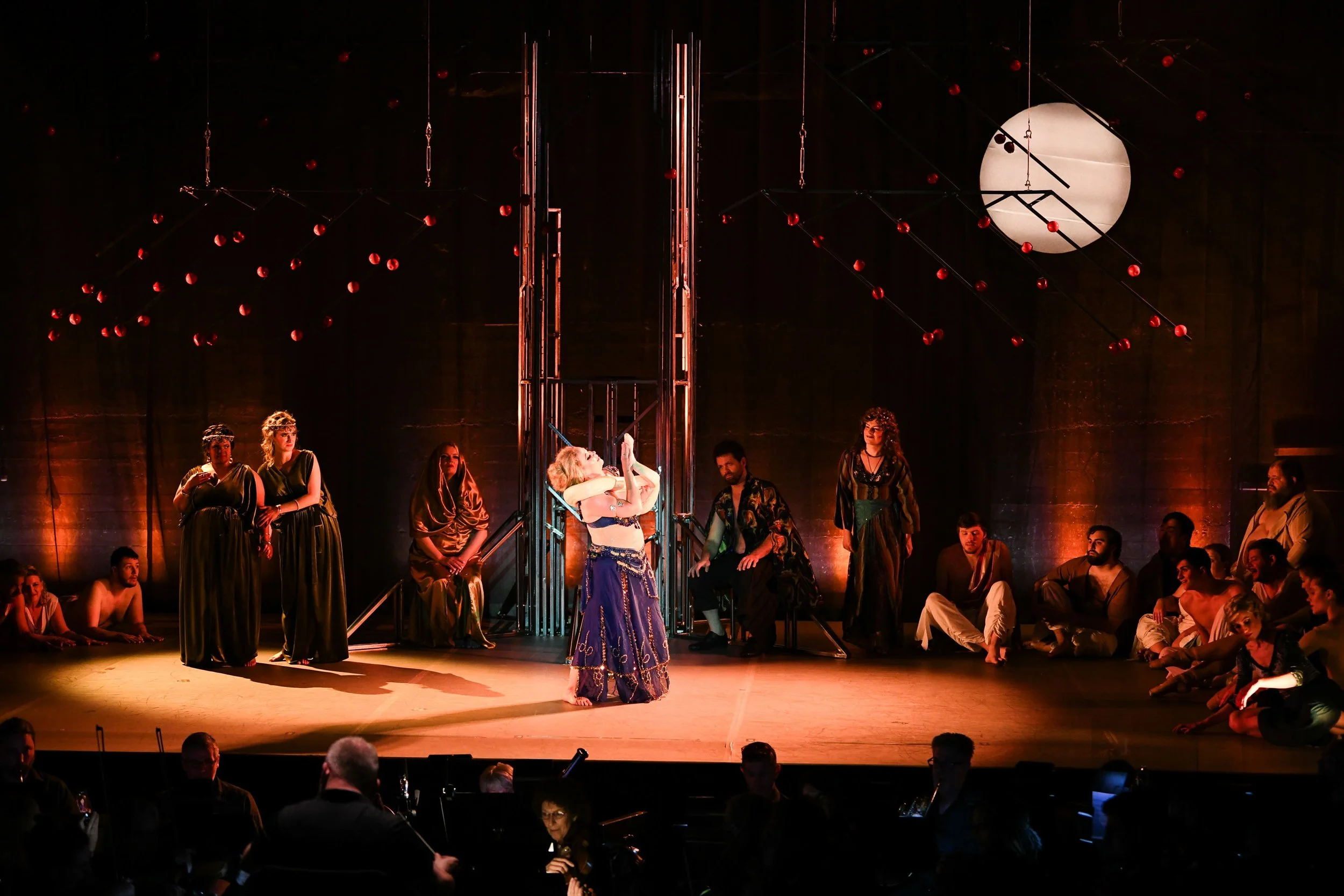
We’re performing Thais in the allegorical, rather than literal setting of the story, at the intersection of two images: the garden of Eden, towards which both Thais and Athanael struggle, and the myth of Daphne. In our first scene in Alexandria, Crobyle and Myrtale, the lovers of Thais’s adoring client Nicias, say that Athanael is appealing enough to turn Daphne human again…to turn wood into flesh. In our staging, Athanael will ultimately turn Thais’s flesh into a part of the apple tree in the garden of Eden; she will unite with this loving god that his dogma has denied him access to. The god that Athanel could never reach, and who Thais ultimately does reach, is a loving god.